Album Review: La Dispute - 'No One Was Driving the Car'

Ferocious punk outfit La Dispute arrive with their first album in over six years, and when it’s structured like a film script and borrowing healthy influences from Paul Schrader you know you’re in good hands.
Borrowing its title form a tragic newspaper article that Jordan Dreyer saw about a self-driving car crashing in a cul-de-sac and killing its passengers; it’s clear that it’s viewed as a metaphor for modern life and the technological apocalypse of over-reliance on AI and tools like Chat GPT that have rapidly swept over public consciousness. This allows Dreyer to form the backdrop of a record that is structured uniquely like a film – First Reformed is cited as a major inspiration, and when you cite Paul Schrader movies and not his personality as examples of inspiration you know you’re in good hands. This is a band that aren’t afraid to borrow influences from wide and reaching places – opening with punk rallying cry I Shaved My Head, out of a minor change and desperation – that sets the tone for a sweaty, angry mosh pit that’s sure to come.
Split into multiple acts but grounded and down to earth, La Dispute’s first trio of songs: I Shaved My Head, Man with Hands and Ankles Bound, and Autofiction Detail gets us going with the narrative structured in multiple chapters. These three follow the “man in the room” set-up of Schrader that’s prevalent all over his films from The Card Counter to Light Sleeper – if you’ve watched any of his films; you’ll know what La Dispute are going for here “a man in his room alone in a bathroom at night,” Dreyer cites as an example, shaving his head whilst he observes a man seen through his neighbour’s window – a woman leaving the building whilst a man is tied up and with ankles bound. It’s a storytelling where the man doesn’t intervene, merely listen – heading on the road to confront his partner at the hospital where they work. The structure of this album feels unique: their pair of sets at 2000 Trees festival set the tone running nicely and pulled you back into the world of the band that isn’t afraid to stop inventing at every turn.
Act II pulls us back into the world with Environmental Catastrophe Film; an audacious, eight minute composition that feels primed and ready for a slow burn of a journey that doesn’t hide back from the detail – and if that wasn’t enough, all three songs feel like they could flow together as one: a story of a boy in a creek-bed in a wooded area; tracing the river around a city, and discovering a church and the furniture industry that dominated the city’s growth. It’s a testament to the worldbuilding of La Dispute that you feel completely immersed in this world – like Schrader again; it’s used to tackle religion with the depravity of man clashing with the sermons rallying for predestination in a Church.
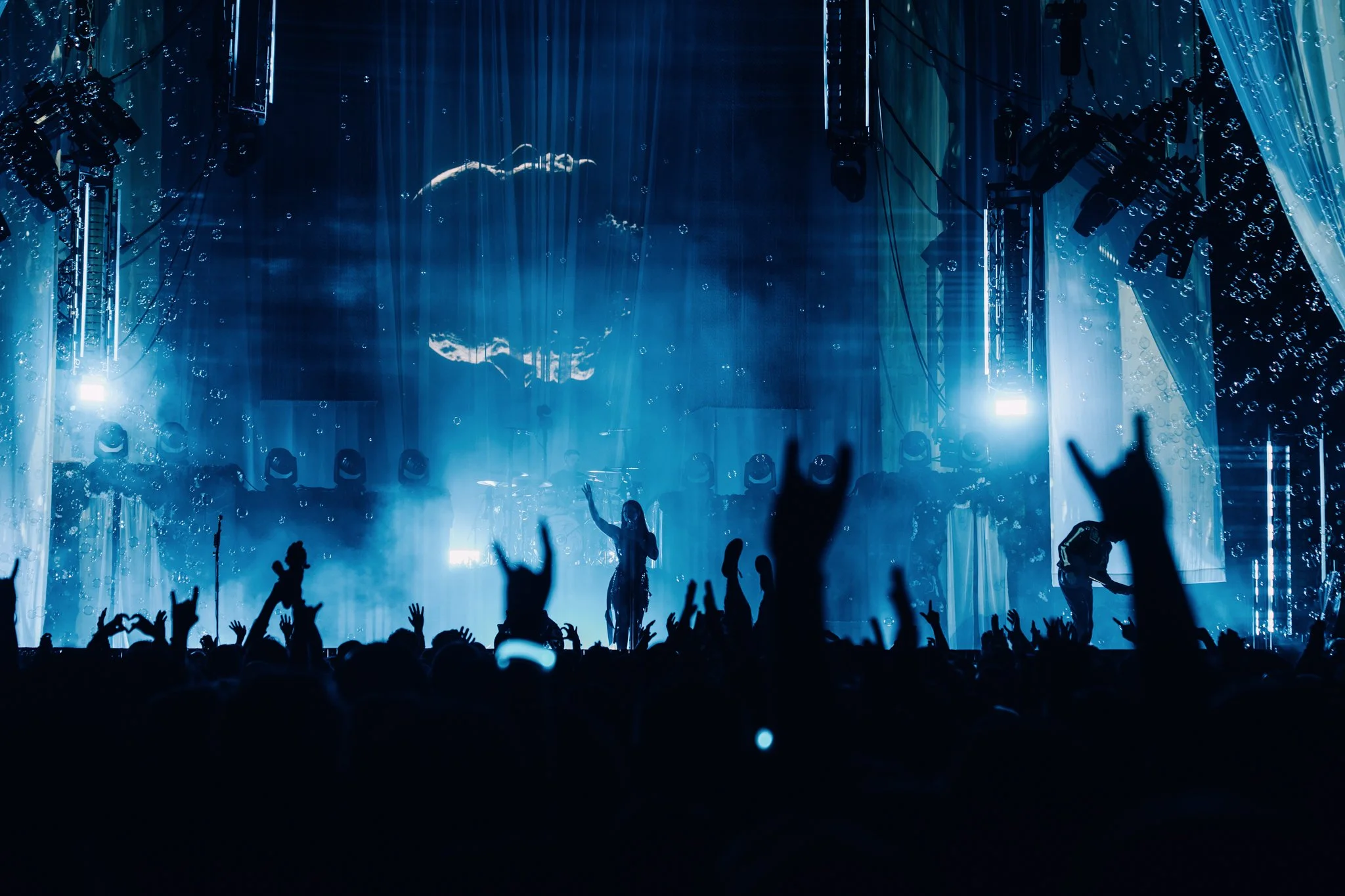
Rarely before has an album felt so cinematic as this – structures of Dreyer’s life and influences feel drawing inspiration here; and you can see the frontman’s vocals in complete control of this arc. When experienced live; you could almost pinpoint the setlist before it happens: The three-act structure practically requires a listen in order – there’s no skipping around, no shuffle here – this is an album designed to be listened to from start to finish; after all – you wouldn’t do the same for a film.
Jumping forward in the narrator’s life and exploring the La Dispute corner of the universe with conceptual fascination, Act III blends the emotion between soft and delicate touches with baroque heartbreak – examining the narrator’s own life in fractions of days, months of and years – mother’s fiftieth birthday party is featured in the song that shares its same title; telling the story of drunk brothers airing their disputes with each other: their mother looking on worrying what role she played in their upbringing. Then we flash forward to years after the fight, what came next – evolving, snapshots of a memory. It’s a fascinating tale – exploring undergraduate university, reformed Christian church – you get to see an entire life through these songs; right the way down to a funeral of a friend – and the companion docs of Chapters I, II and III really add depth to this world and these characters. It feels lived in, inventive, and earth-shatteringly groundbreaking. No other record this year is quite like No One Was Driving the Car, and no other record even dares to be as close experimentally.
The record flows on from there with its multiple acts – Landlord Calls the Sheriff In and I Dreamt of a Room with All My Friends I Could Not Get In shows the heartbreak of isolation, and then there’s the titular track: a commentary on the over-reliance of artificial intelligence; and of course – given the album’s themes of religious upbringing and youth, where better to end on than the five minute eulogy of End Times Sermon? You can bet I’ll be seated for their tour back in London early next year – No One Was Driving the Car is experimental as its name suggests and doesn’t really hold back in avoiding conformity or pressure.
Words by Miles Milton-Jefferies