Album Review: Kid Kapichi - 'Fearless Nature'

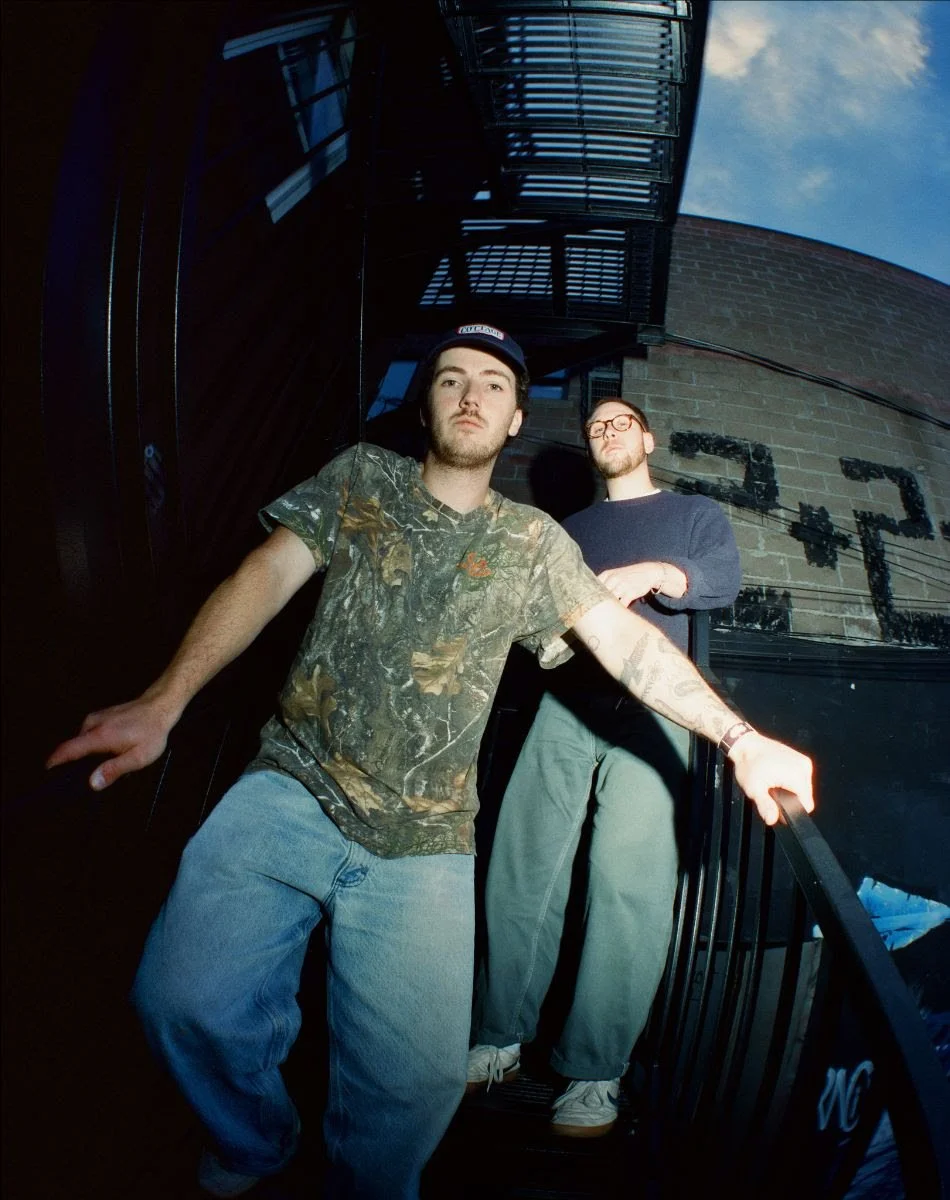
The former four-piece return as a duo, swapping out punkish anthems for something more introspective.
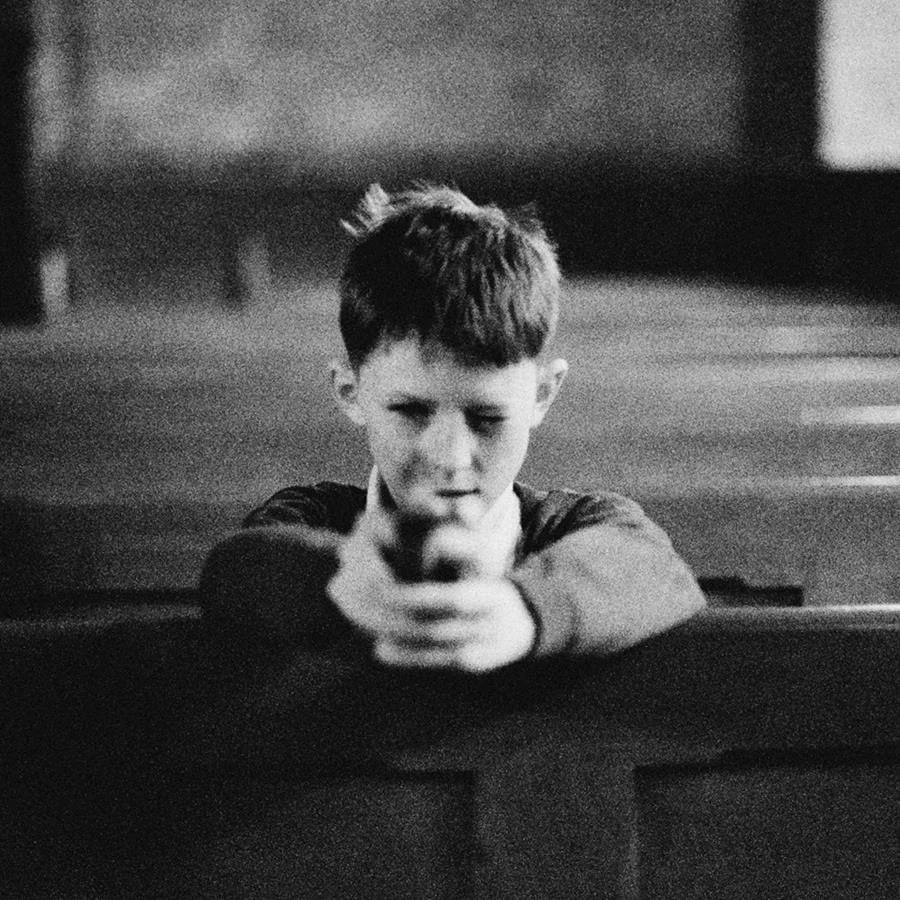
You only have to glance at the cover artwork for Kid Kapichi’s fourth album ‘Fearless Nature’ to know that this is no longer the same band that delivered a crowd-pleasing culmination of their classic sound just two years ago, in the form of buzzy third record ‘There Goes The Neighbourhood’. That album’s cover was bright yellow, perfectly encapsulating its energetic contents. ‘Fearless Nature’, on the other hand, is enclosed in a stark black and white split, reflecting not just the decidedly darker nature of its songs, but also the literal split at the heart of this hard rebrand.
In May of last year, the band announced that two of its founding members -guitarist Ben Beetham and drummer George Macdonald - were departing, citing their desire to explore other projects. The split was very much amicable, borne out of Beetham and Macdonald’s refusal to give Kapichi anything less than 100% of their time and effort. Nonetheless, it left vocalist & rhythm guitarist Jack Wilson and bassist Eddie Lewis at a crossroads - could Kid Kapichi work without Ben & George? The answer is, ironically enough, not black and white. While Beetham and Macdonald no longer play live - having been ably replaced by Lee Martin and Miles Gill respectively - they did help write and record ‘Fearless Nature’ as usual, prior to their decision to leave. As such, the album acts as both a beginning and an end; a final bow for Ben & George, but also a bold new start for Jack and Eddie.
Pleasingly, the band’s decision to switch up their style pre-emptively plays into this feeling of reinvention. From the off, it’s obvious that ‘Fearless Nature’ represents a reset for a band most commonly described as punk. Opening track ‘Leader Of The Free World’ bridges the gap between old and new, with the personal (“Why does the crowd go wild? / Where’s your inner child?”) colliding with the political (“What’s the leader of the free world? / Is it the money or the people? / [..] Turns out the first one was better than the sequel”) over sinister, swaggering instrumentation. Boasting a deep groove and droll sense of despair, it’s a thrilling, foreboding introduction to a band born anew.
The following song ‘Intervention’ is the closest thing to a classic sounding Kapichi tune, with its pummelling drums and distorted guitar. Lyrically, however, it sets itself apart from the establishment-bashing of old. While the band have always included more personal songs on their albums, they were typically either light-hearted relief (‘Subaru’), or a closing moment of emotion (‘Hope’s a Never Ending Funeral’) amidst an array of protest songs.
With ‘Fearless Nature’, it’s the other way round. This is an album almost exclusively concerned with addressing Wilson’s mental health crisis circa summer 2024. “I was in a pretty awful place where I just didn’t know who I was”, he explains. The end of a stable relationship had become the catalyst for a string of mental health struggles for Wilson, who found that his usual songwriting style - at once angry, witty, and observational - was majorly out of step with what he was feeling. “The other albums were written about other people”, he reflects. “This one resounds with me and who I was at that time. I just had my mind blown open to how vulnerable I was”.
Beneath the swirling production and fuzzy feedback of ‘Intervention’, these concerns are clear to hear. “Too weak, too bold/ There’s a reputation to live up to”, he confesses via verse. Lead single ‘Stainless Steel’ sees him on similarly honest form. “Do you live in silence, with words unspoken?/ Scared that when you pull the cord the parachute won’t open”, he asks on the song’s brooding bridge, before asserting that “I’m made of blood/ I’m made of bone”, in a catchy chorus anchored by Lewis’ bouncy bassline.
‘Shoe Size’ finds Wilson re-entering the dating pool, propelled by a metallic, almost industrial sonic palette, while the eerie ‘Dark Days Are Coming’ suggests that such quick fixes aren’t the answer - at least not yet. The hypnotic loop of the song does a remarkable job of conjuring up the infamous “powerful sense of dread” that Peep Show’s SuperHans was determined to capture on record.
The album is at its best when Wilson tackles his relationship woes head on. ‘Worst Kept Secret’ is a standout, both musically and lyrically. “Call me a good time, call me relief/ Thorn in your side and I’m stuck in your teeth”, he sings over a gritty riff. “Calling me out, call it the end/ But don’t call me a friend”, he laments, before a rousingly melodic chorus lays his feelings bare. “I know, you give it to my psycho/ We’re just falling about, falling about my mind”, he divulges during its potent sonic whirl, one of many that Franz Ferdinand producer Mike Horner expertly crafts alongside Beetham.
Better still is the mysterious ‘If You’ve Got Legs’, a deliciously dark slice of desert rock that’s strikingly reminiscent of Arctic Monkeys’ psychedelic third album ‘Humbug’. Elsewhere, the beat-driven ‘Head Right’ channels Gorillaz and The Streets, while the uplifting, country-tinged swing of ‘Patience’ puts a positive spin on the album’s themes of change and renewal. “I’ve got this feeling in my bones/ Something that says it’s time to go”, Wilson sings, in one of the album's sweetest and most memorable melodies.
This sentiment also applies to the stunning, understated ballad ‘Saviour’, which brilliantly juxtaposes its bright production and tune with truly heartbreaking lyrics. “And I guess that’s just the way it is, I guess that’s the way it goes/ When I said you should keep them, but you still returned my clothes”, concedes Wilson, bidding a bittersweet farewell to his former lover.
Closing out the album with a similar balance of light and dark is ‘Rabbit Hole’, at once a nostalgic look at the past, and an existential grappling with the present. “There’s a picture of a pub long closed/ Underage drinking with the family that we chose”, smiles Wilson over lively drums and a pulsating synth pattern which recalls The Who’s iconic ‘Baba O’Reily’ intro.
As with the majority of ‘Fearless Nature’, there’s an inherent melancholy to the song, a level of introspection previously only aired now and then. But there’s also a sense of acceptance. As the string arrangement settles down and the gentle synth outro wraps up, there’s a palpable feeling of hope. “Dark days are coming”, warned Wilson earlier on the album, and for the world generally, it’d be borderline delusional to argue otherwise.
For Kid Kapichi, however, it feels like they might’ve already been and gone.
Words by Ben Left