Album Review: Shania Twain - 'Little Miss Twain'
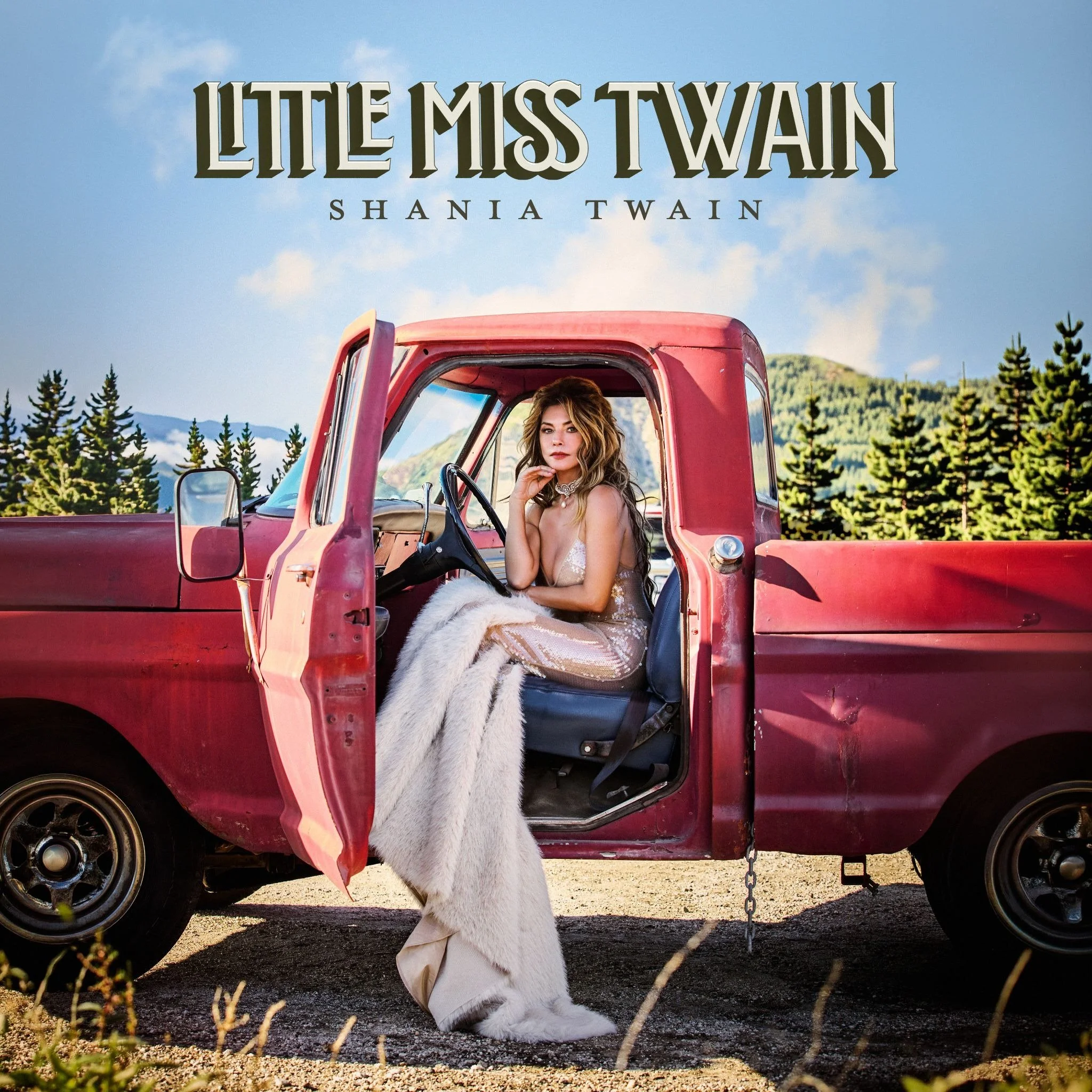
Shania Twain finds the girl who never got the memo that genres exist.
Little Miss Twain isn't a comeback record so much as an origin story, and like all good origin stories, it starts with someone else's belief arriving before the proof does. The title track is where that belief lives, Twain singing about her mother's conviction that stardom was coming with a rawness that goes well past nostalgia, and having Tanya Tucker actually there to duet turns a childhood fantasy into something almost uncomfortably real. Everything else on the record plays out in that song's shadow, a life spent trying to earn a faith someone else had in her before she had it in herself.
From there, the album drifts into the escapism of youth, the version of Twain who hadn't yet had to prove anything. "Stranger Things" opens on a hush so tightly matched to its lyric it stops feeling like performance and starts feeling like memory, that specific disbelief of watching someone become the person you didn't see coming. "New Love" is pure first-crush euphoria, giddy enough to make Olivia Rodrigo's teenage diary entries look positively guarded by comparison, while "Faded Blue Jeans" earns its keep on production alone, slow and tender until the drums kick in right on cue, mirroring memory tipping over into full nostalgia.
But belief that big always leaves a bruise somewhere, and by the album's middle stretch, that bruise finally gets pressed. "Right Time" is the cleverest sleight of hand here, bright, breezy production sitting
directly on top of hard-won heartbreak, more Kacey Musgraves-does-a-beach-holiday than ballad, refusing to let its own sadness slow it down. "Scary Little Thing" is sharper still, all bar-light tension and the exact second before you know you're about to make the same mistake twice, closer to Amy Winehouse's knowing self-sabotage than anything else here, and "I'd Be Loving Me" turns fully confrontational, one unanswered question aimed at someone who's let her down more than once.
By the album's back half, the bruise starts to fade into something calmer. "Down the Middle" recovers fast with real, startled joy, "Take It to the River" slows into aching reconciliation, and even the record's more scenic detours, "That's the Money," "Rock Stars", read less like filler and more like someone finally allowed to just enjoy a view without needing it to mean anything. The four bonus cuts close things out quickly: old anger let go, quiet dread, lighter footwork, reckless momentum, less an afterthought than a soft landing.
By the time the record ends, it's earned its own thesis. Little Miss Twain isn't Twain's tightest album, the reach for nostalgia occasionally outpaces the writing behind it, but it's the one where the little girl in the bar and the woman singing about her finally meet in the same song. Thirty years into being larger than life, that's the trade worth making.
Words by Dhriti Duggal