Album Review: Whitney - 'Small Talk'

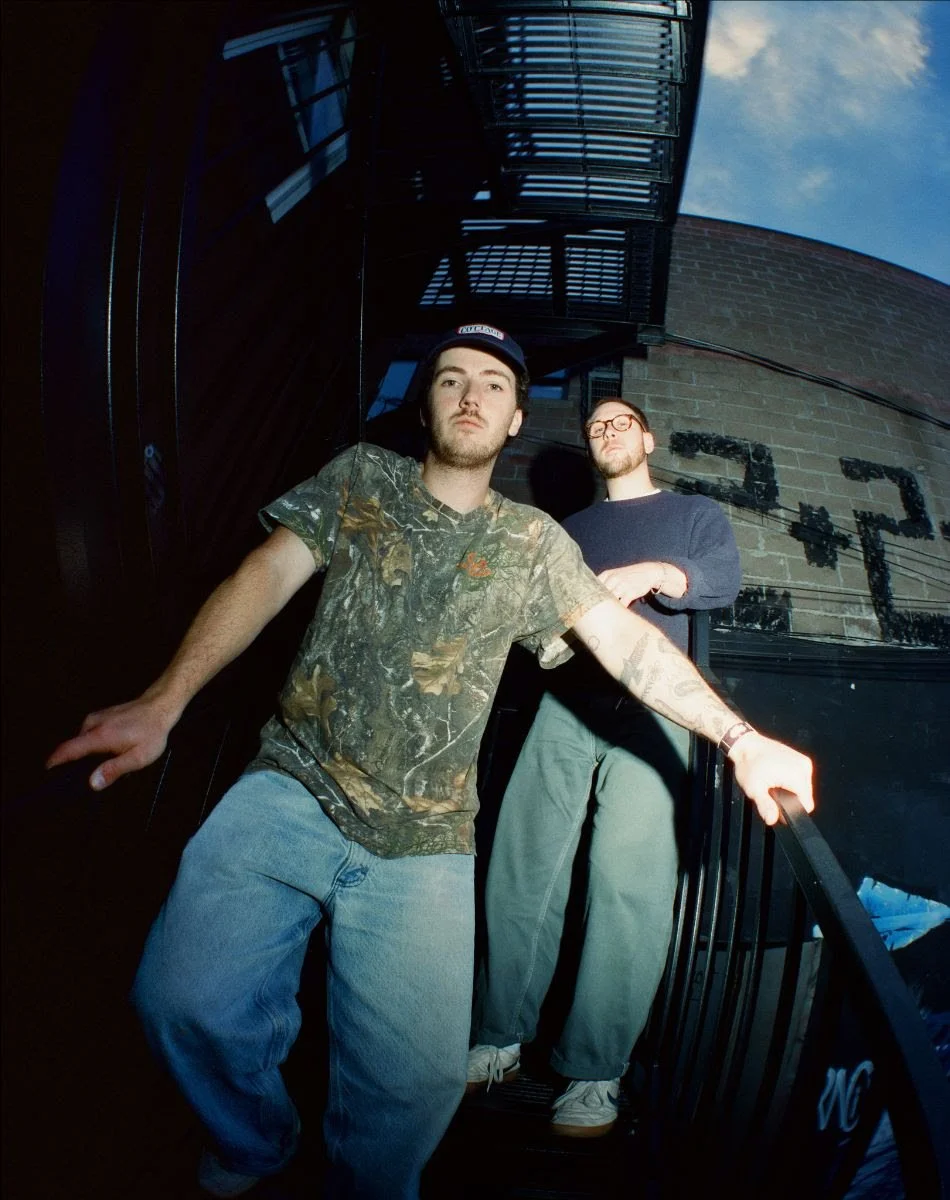
The narrative arc of Whitney—the Chicago duo of Julien Ehrlich and Max Kakacek—has long been defined by a kind of endearing, fragile melancholy, a soft-focus indie-soul that felt perpetually caught between a sweet, tremolo-soaked present and a more confident future. Their debut, 2016's Pitchfork-lauded Light Upon the Lake, established a tender, country-tinged foundation. But then came 2022's Spark, a detour that, by the band’s own admission, was a struggle, its new electronic textures and structures failing to find the reciprocal excitement the band had hoped for. Now, with their fourth and unequivocally best and most affecting album, Small Talk, Whitney has done what few artists manage: they've channeled a period of intense personal and professional upheaval into a hard-earned expression of self-confidence that feels like a vital homecoming. This is the sound of an established band finally embracing the fullness of their own chemistry and vision.
The most critical factor in this renewal is a simple, yet profound, one: self-production. Following an unexpected but prescient piece of advice from producer Brad Cook in 2021—that Whitney no longer needed a producer, Ehrlich, and Kakacek took nearly two years to test the waters. The proof of concept was the new song ‘Back to the Wind’, which stripped things back and revealed the sound of vintage Whitney reborn.
The recording of Small Talk took place in the summer of 2024, almost three years after Cook’s challenge, in an optimal sans-producer space—Ehrlich's dad’s barn, which resembles an airplane hangar, filled with salvaged recording gear in Newberg, Oregon. Asrar engineered the whole thing, affording them the time to rediscover the core of the band itself. They deliberately embraced a DIY mentality like Big Star, allowing mistakes and accidents to shine through, aiming to feel more human even with bigger production, including strings and horns.
The new record moves with a liberated grace, showcasing their signature sound with an elevated confidence. ‘The Thread’ is lifted by bright strings over a groove and lick The Band might have favored. Meanwhile, the single ‘Dandelions’ is a midsummer gem that serves as an antidote to the sting of romantic disappointment. With Julien Ehrlich's trademark falsetto complemented by horns, strings, and Max Kakacek’s plaintive slide guitar, it's a nostalgic, hopeful ode to resilience. It feels destined for an FM dial, bouncing between the solo work of Paul McCartney and the Nashville period of Bob Dylan.
But the growth is most evident in the tracks that defy the expected formula. The lead single, ‘Won’t You Speak Your Mind?’ tackles a long-distance relationship but finds Whitney locating the sonic middle ground between a disco dance floor and a yacht bandstand. It’s a moment of expert, yet seemingly effortless pop songwriting. Then there’s ‘Evangeline’, a genuine revelation that features a special guest appearance from Madison Cunningham. The track is built on concert snares and swelling strings before Cunningham steps in to deliver the other half of the story. It’s an aural tug of war driven by the push and pull of longing and opposition.
The album further bookends its emotional scope with two standout tracks. The opener, ‘Silent Exchange’ is a dark snapshot of a funeral, with Ehrlich’s wondrous falsetto rising through strings like a light beam as he wonders what else there might be in this world. The twisting, audacious title track, ‘Small Talk’ closes the loop by shifting perspective; Ehrlich sings from the imagined point of view of Kakacek’s grandmother, a caretaker who ponders the feelings you hide to put on a show.
This winsome endurance culminates in the closer, ‘Darling’ a contender for the most striking and singular number in Whitney’s entire catalog. It begins as a familiar breakup song but just past the halfway mark, a new beat emerged transforming the song into a flute melody with a triumphant rhythm. On Small Talk, Whitney finally sound free. This is the band taking the reins, not just recreating their past success, but distilling their signature sepia-tinged soul with a newfound cinematic production and a deep, self-assured honesty. It’s the band we loved from Light Upon the Lake, but now grown up, a little wiser, and finally operating without a safety net—and soaring because of it.
Words by Oliver Evans