Cara Delevingne - ‘I Forgot’ / ‘Out Of My Head’
Cara Delevingne arrives at her musical debut not as a tentative crossover novelty, but with the kind of conceptual clarity and aesthetic ambition that suggests a long-considered second language finally spoken aloud.
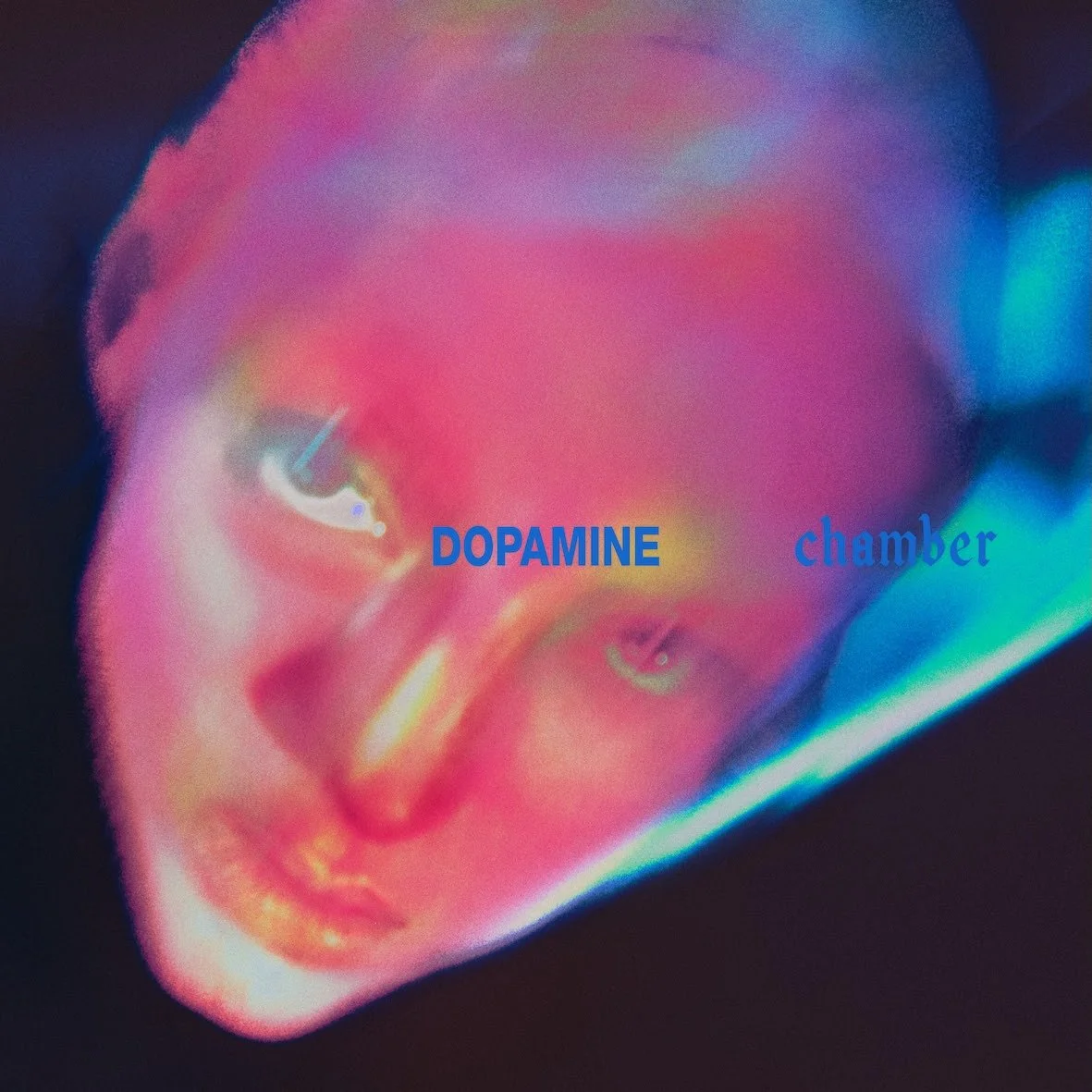
With the double release of ‘I Forgot’ and ‘Out of My Head’, she does more than simply step into pop music; she constructs an entry point that feels intentionally fractured, emotionally volatile, and stylistically unafraid. It is a debut framed less as a collection of songs and more as an artistic rupture, one that resists the polished predictability often expected from celebrity music ventures.
‘I Forgot’ opens the project like a bruise slowly being pressed. Built in collaboration with Trey Campbell and producer BJ Burton, whose résumé includes boundary-pushing work with Bon Iver, Nine Inch Nails, and Charli XCX, the track leans into an unsettling sound design that feels deliberately unstable. Burton’s influence is unmistakable: jagged textures, distorted edges, and a refusal to let the instrumentation settle into comfort. Delevingne’s vocal performance is not engineered for perfection; instead, it is brittle, close-miked, and emotionally exposed, hovering somewhere between confession and collapse. The lyrical content, touching on addiction and psychological strain, avoids melodrama by embracing fragmentation. Rather than narrating pain cleanly, she presents it in shards, allowing the listener to piece together meaning from repetition and rupture.
If ‘I Forgot’ is internal disintegration, ‘Out of My Head’ is its kinetic aftermath. The track shifts gears into something more physical, initially pulsing with a trip-hop gravity before breaking open into a drum ‘n’ bass surge that feels almost like emotional acceleration. Where the first track is claustrophobic, this one is expansive. There is a sense of movement not toward resolution but toward escape; an attempt to outrun thought itself. Delevingne’s vocal delivery adapts accordingly, becoming more rhythmic and insistent, less a whisper from inside the mind and more a transmission sent through motion. The production embraces this duality, refusing to anchor itself in one genre for long, instead letting textures collide and dissolve.
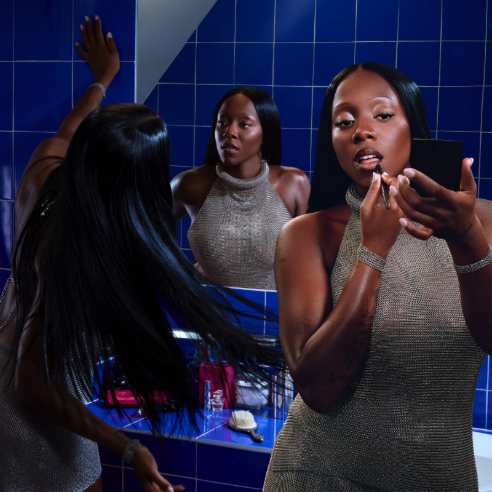
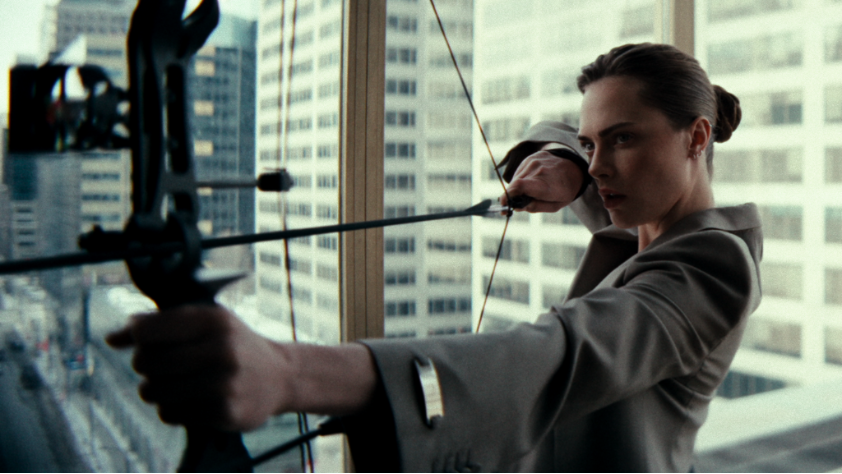
What elevates the release beyond conventional debut territory is its visual counterpart: a seven-minute short film directed by Jessica Lee Gagné. Rather than functioning as a promotional accompaniment, the film operates as an extension of the music’s philosophy. It repeatedly exposes the mechanics of its own construction, lighting rigs, crew members, staging, breaking the illusion even as it builds it. This meta-theatrical approach mirrors the songs’ emotional transparency. Delevingne is seen fighting, dancing, and screaming through constructed environments that never fully allow immersion, suggesting that emotional states themselves are staged, edited, and performed even in their most private moments.
There is a deliberate rejection of polish here that feels central to the project’s identity. Where many debut artists are guided toward sonic cohesion and commercial accessibility, Delevingne leans into abrasion and instability. It is a risky choice, but one that pays off in artistic credibility. The involvement of Warner Records signals industry backing, yet the music itself resists being smoothed into label-friendly uniformity. Instead, it occupies a space closer to experimental pop and industrial-influenced electronica than mainstream radio structures.
Contextually, Delevingne’s prior creative history adds further weight to the release. Her sporadic but intriguing musical past, ranging from collaborations with Pharrell Williams on ‘CC the World’ to vocal contributions for St. Vincent and Fiona Apple, has always suggested an artist drawn to music’s more avant-garde edges rather than its commercial centre. This debut finally consolidates those fragments into something cohesive, even if that cohesion is built on emotional volatility rather than stylistic consistency.
In her own words, she describes ‘I Forgot’ as a rebirth and ‘Out of My Head’ as therapy, and while such statements risk sounding promotional in lesser hands, here they feel structurally reflected in the work itself. The music behaves like processing rather than presentation; less about declaring identity and more about shedding it in real time.
As a debut statement, this double release does not aim for perfection, nor does it seek easy accessibility. Instead, it offers something rarer: a controlled unravelling. If this is indeed the foundation of a forthcoming album, it suggests a project that will prioritize emotional architecture over genre boundaries. In that sense, Delevingne’s entrance into music is not just credible; it is compellingly unfinished, like a door left open rather than a room fully furnished.
Words by Danielle Holian