Album Review: Tom Smith - ‘There Is Nothing In The Dark That Isn’t There In The Light’
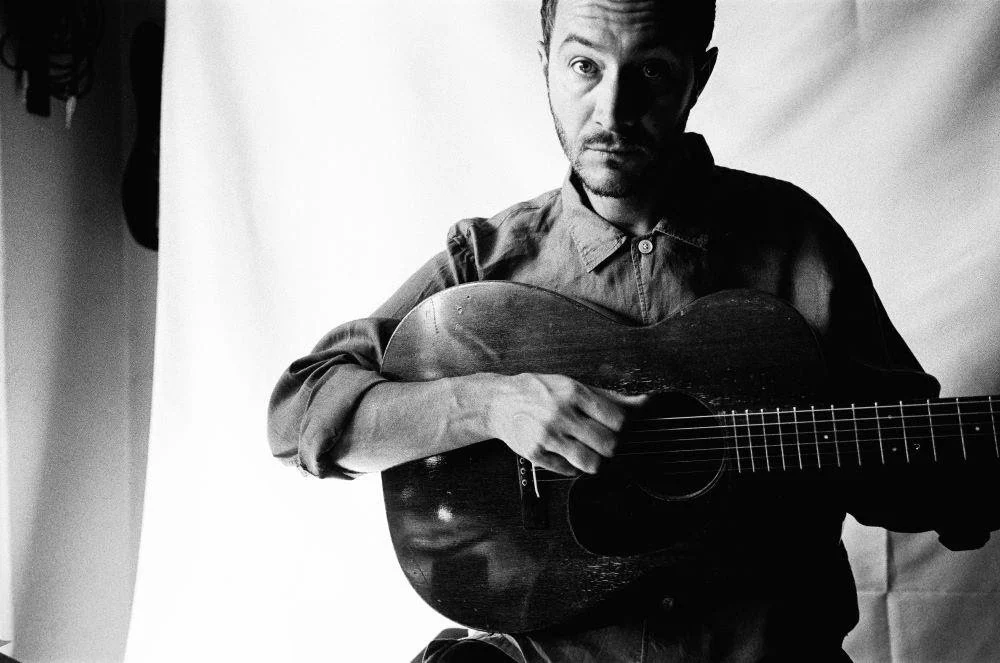
Tom Smith’s debut solo album ‘There Is Nothing In The Dark That Isn’t There In The Light’ retains the warmth and optimism of his band Editors whilst slow-dancing to a different sonic heart.
The 44-year-old has spent over 20 years releasing material with the main band, as well as two Smith & Burrows records, elements of which are present in the album. This project sticks to the roots of how those songs start, and feels like a friendly accompaniment to the calmer, quieter parts of life across the winter.
In 2014, a Mirror article hailed Tom Smith for having the best vocal range in UK pop and rock, with a vocal range of 4.75 octaves, ahead of Iron Maiden’s Bruce Dickinson and Led Zeppelin’s Robert Plant. That stentorian voice guides this album home.
Tom can hide his ambiguity in the noise of Editors, but this has been removed under the guise of Iain Archer, a friend from the circuit, and a creative force behind the songwriting and production of TINITDTITITL. (Okay, the initialism won’t catch on.) The result is sparser, more sensible, and more grown-up. It has cinematic moments and stripped-back arrangements to make something raw and personal, an album about connection, memory and resilience through the tough times.
The album title encapsulates the record’s hope, and comes from a lyric in ‘Deep Dive’, the first song. It sets out a distinction from the band, a spartan gentleness that could be lost beneath the clatter of Smith & Burrows or the chaos of Editors. The creation of it gave the project direction, and creates an anchor for what’s to come. Iain shines off some of the obscurity in Tom’s songwriting in this tale of strength in numbers. “You are not alone when you’re lonely.” He might sing “nothing is ever simple”, but there’s a clear pathway to the ongoing minimalism.
The bustling city of London has always been a fertile ground for Tom’s songwriting, and there are further examples here too. In ‘How Many Times’, he sings about having “lost my heart near Oxford Circus”, in a tune akin to ‘This Ain’t New Jersey’ but without the Christmas vibe. It builds to a key refrain - “when the world is against us, all we have is dependence” – before ending with a funky flourish without fully falling into it. It leads smoothly into the calm acoustics of ‘Endings Are Breaking My Heart’, about a shell of a man being urged to “move on”. The versatility of Tom’s voice comes out as he sings: “Always a dream at the start, endings are breaking my heart”.
The project’s first releases, ‘Life Is For Living’ and ‘Lights of New York City’, signposted the record’s calmer nature, more aligned to the second and fourth Editors records than the more electronic outputs elsewhere in the band’s catalogue. ‘Life Is For Living’ is big, sweeping and dramatic, while New York, a city seemingly at odds with the sound of this record, is honoured in a track bathed in nostalgic longing. Sandwiched between them is the album’s shortest track, ‘Broken Time’, aching with minimalist fragility. Tom sings “our love was broken time” in a John Martyn-esque story wrapped up in two minutes and 45 seconds.
In the album’s longest track ‘Northern Line’, Tom delves into his friendship with Andy Burrows. When he sings “formed a band in the city”, he’s talking Smith & Burrows, not the other guys. Across four and a half minutes, Tom revels in using London as a device again, locating The Southampton Arms in Highgate, “in the corner, where singing numbs the pain”. There’s a yearning for the past, the good memories remain, along with the ongoing question: “I wonder if I wanna go back, if I wanna go back?”
It's preceded by the energetic ‘Souls’, a beautiful and chaotic track with a lovely line about clinging to driftwood, which could have been a band song in a previous life. ‘Leave’, the track after ‘Northern Line’, has a very Editors-y title. The song is presented as a band-esque song with a conflict vibe and a pop sensibility running through it, accompanying the acceptance that things will pivot again. It’s a message that feels prescient to the whole album.
Finale ‘Saturday’ was the last song put together in the studio in Donegal, north-west Ireland. The piano ballad is a soft, reflective mirror to the nine previous tracks. “I only want to hear you talk to me, talk to me, would you talk to me?” It’s a bittersweet snapshot of fleeting intimacy to close off the story of Tom’s first solo album. It feels like the end of the night, a tonal sadness that is felt before the lights go out.
There is a valid justification to “going solo”, differentiated from the other projects with its stripped back accompaniment. He is keeping the sound distant from Editors - it’s late night, calmer, and reflective - but the result feels equal. It may be a surprise to those focused on the band’s output, but rings true to the origins of those same songs.
It’s a chance to reflect upon moments of solace in the most chaotic of big cities, an opportunity to marvel in the calmer moments amidst the festive frenzy. It is rich in the spirit of Tom’s past songwriting, but with Iain’s help, verges into different territory from the sounds added by his bandmates elsewhere.
Over 20 years ago, on the Editors single ‘Blood’, Tom sang “if there's hope in your heart, it would flow to every part”. It’s served Tom well so far, and on ‘There Is Nothing’, there is a little something to take us out of 2025 and into the great beyond.
Words by Samuel Draper